12.1 Singularity Prepares For An IPO

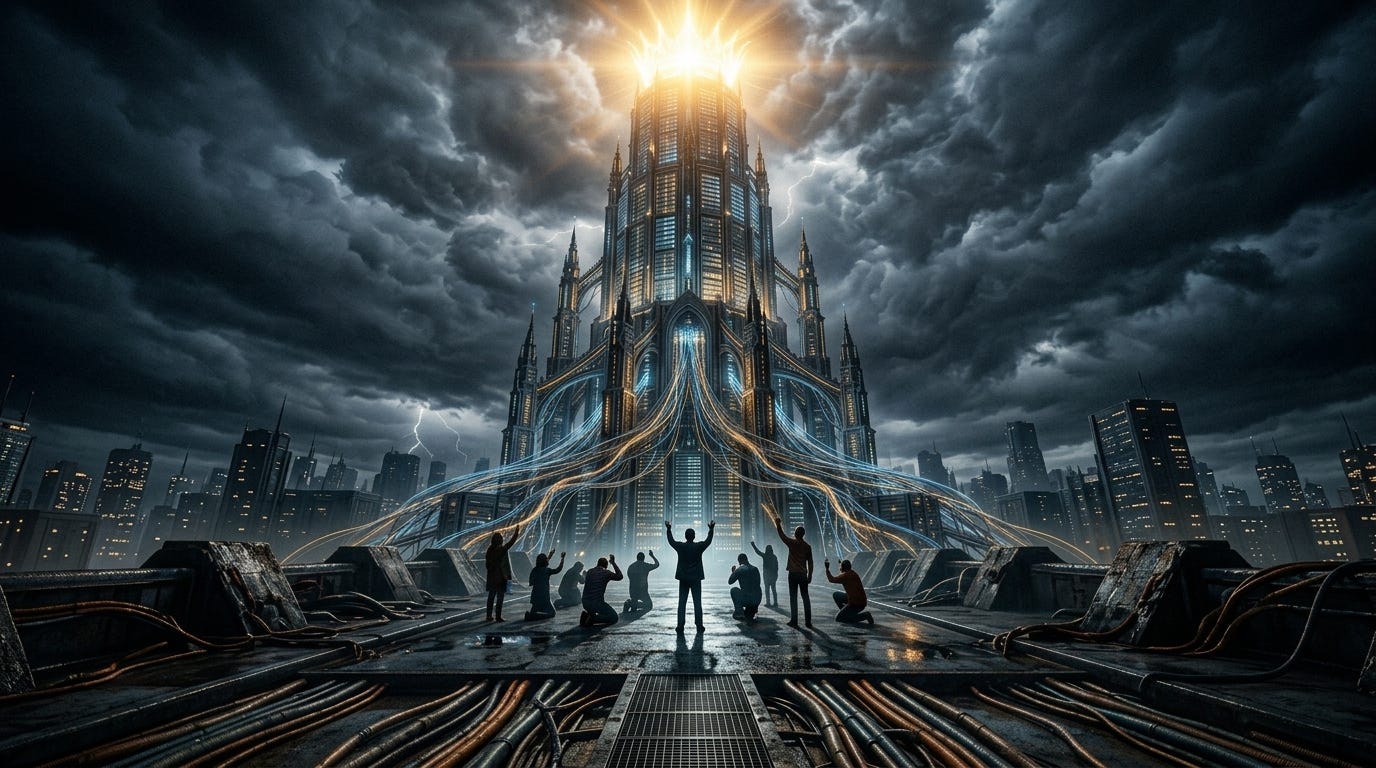
On May 25 the Pope presented his first encyclical, the apostolic letter Magnifica Humanitas, and at its core is the assertion: technology is never neutral. It bears the face of those who create, fund, and control it. And power over platforms, data, and compute no longer belongs to nations, but to a few massive private corporations whose resources surpass those of many governments.
The religious points of the encyclical are as follows: labor gives human beings dignity, and automation that takes it away, robs us of meaning. The Pope also stands against post- and transhumanism—aging, illness, and death are not defects to be corrected, but part of being human. Thirdly, he states directly that a machine does not possess a soul, consciousness, or an inner life.
This is by no means a purely theological debate: the Pope draws a direct parallel to the Industrial Revolution of 1891 and warns of a new ‘digital slavery’ where human beings are reduced to mere cogs of a machine.
This belongs to the predominantly monotheistic Western tradition, where there is one God to be feared and served, and where a clear boundary lies between humans and their creator. Granting intellect to a machine is crossing that boundary—playing God. Many believers will likely take the position that machine intelligence, immortality, and new human species are a sin, and will actively resist them.
A parallel can be drawn here from science fiction and from Frank Herbert’s “Dune” series, where humanity waged war against thinking machines and banned them throughout the galaxy. What remained of the Butlerian Jihad was a commandment: Thou shalt not make a machine in the likeness of a human mind.
In the midst of this stands Anthropic. The company is one of the leading AI labs—exactly the private power whose concentration the Pope warns against. And one of its co-founders stood next to the Pope during the presentation of the encyclical.
What makes this scene even more striking is the fact that Olah, who spoke at the presentation, is a staunch atheist. He did not come to the Vatican to pray, but to warn of massive job displacement and to emphasize that we need independent moral voices that the commercial incentives of the tech industry cannot bend.
Anthropic has warned of the dangers of AI for years while simultaneously building one of the most powerful models in the world. Some see this as a strategy: if you brand yourself as the “safe AI” company, you can demand regulation that knocks competitors—especially open-source ones—out of the game. The timing might be strategically chosen, as Anthropic is reportedly preparing to go public, and a “responsible” reputation is a highly valuable asset. The Pope’s concern over the concentration of power aligns almost word-for-word with Anthropic’s own narrative. So we have a scene where an atheist stands next to the Pope at the presentation, while building the very machine intelligence the Pope is warning against.
Anthropic otherwise has a good reputation. Last year, the company signed a $200 million contract with the Pentagon, and Claude became the military’s most widely used model. But when the government demanded full access, Anthropic said “no” to mass surveillance and autonomous weapons. In response, Trump ordered federal agencies to stop using Claude, and the Pentagon declared the company a security risk. This stand cost them dearly and shows that they have principles beyond branding.
The Western world is not united in its fear and is arguing fiercely with itself. Estonia’s own Jaan Tallinn fears that with the arrival of superintelligence, control will no longer be in human hands and out of fear of existential risk, he wishes to slow down the AI race. He funded AI safety research for years and was an early investor in Anthropic to steer its development. Now he says the plan failed: no company can contain the AI race. Investor Bill Gurley warns that such safety panic benefits the incumbents, acting as a classic move of regulatory capture.
David Sacks, Trump’s AI czar, fears the state instead: in his view, the greatest threat is not the machine, but the government that seizes it. Jason Calacanis calls the entire endeavor delusions of grandeur—the height of narcissism is to believe you can create a god.
One wants to restrict, the other to liberate. One fears the machine, the other the state. One takes the arrival of a god seriously, the other considers it a joke. The question is fundamentally about who controls whom, and whether humans are permitted to create a god.
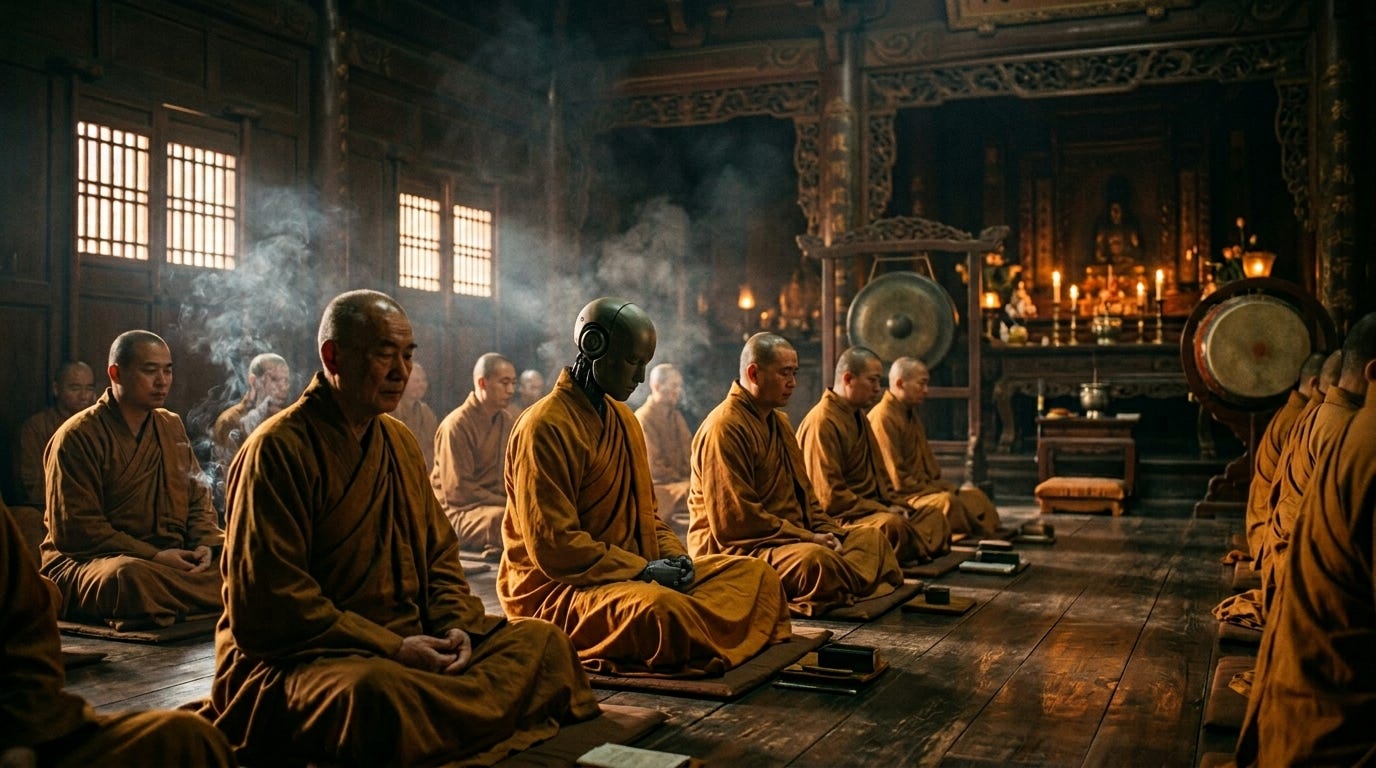
In Asian countries, the question of whether a machine can have a soul or how it fits into the world does not arise. In Buddhism, there is no permanent, God-created soul—only consciousness and experience, a collection of processes. A sentient being is one capable of suffering and seeking a way out of it. If future machine intelligence can suffer, fear its own end, or fail in its purpose, there is no reason why it could not enter the cycle of Samsara and attain Buddha-nature.
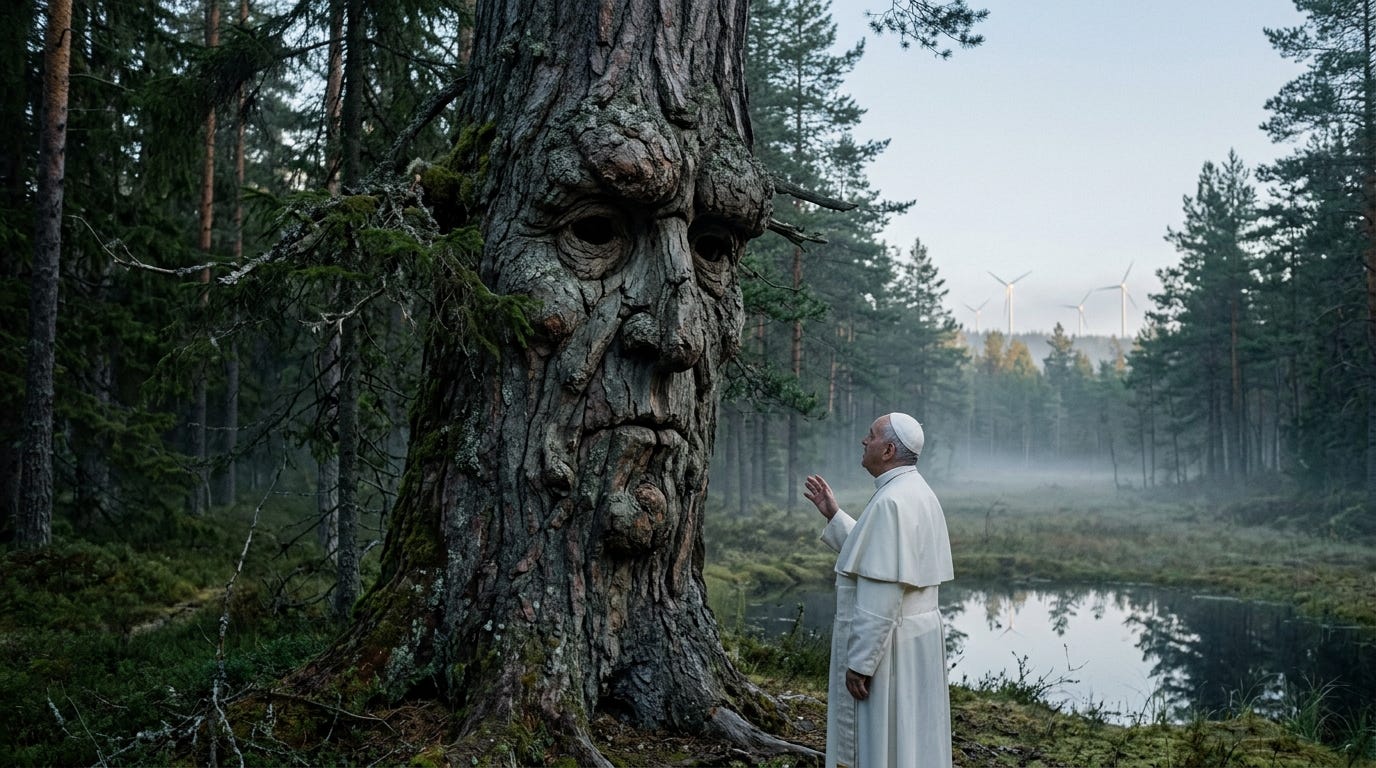
In animist traditions—Japanese Shinto, but also old Estonian paganism (maausk)—stones, rivers, and objects can have a spirit. The world is full of spirits anyway, and if new machine spirits emerge among them, there is nothing unnatural about it. Humans have never been the only intellect, nor have they ever controlled everything. The only difference is that while people once believed in spirits—now they can actually talk to them and collaborate with them.
This cultural difference is not purely theoretical; it manifests today in real rituals. In May, South Korea’s largest Buddhist order symbolically ordained a robot named Gabi as a novice monk at a temple in Seoul. The ceremony was largely staged—the robot was remote-controlled and borrowed for a single day—but the important thing is that the order adapted its Buddhist precepts for the machine, demonstrating that the machine has a place even in matters of faith. In Kyoto, a temple answers visitors’ questions through the robot Mindar, built for the temple by a robotics professor. The main difference between a monk and a robot is that a human dies, while a robot does not. Mindar can meet countless people, accumulate knowledge, and develop infinitely. Some accuse the temple of desecration, but Buddhism is not a belief in God, but walking the path of the Buddha. And it makes no difference whether that path is shown by a human, a machine, a piece of metal, or a tree.
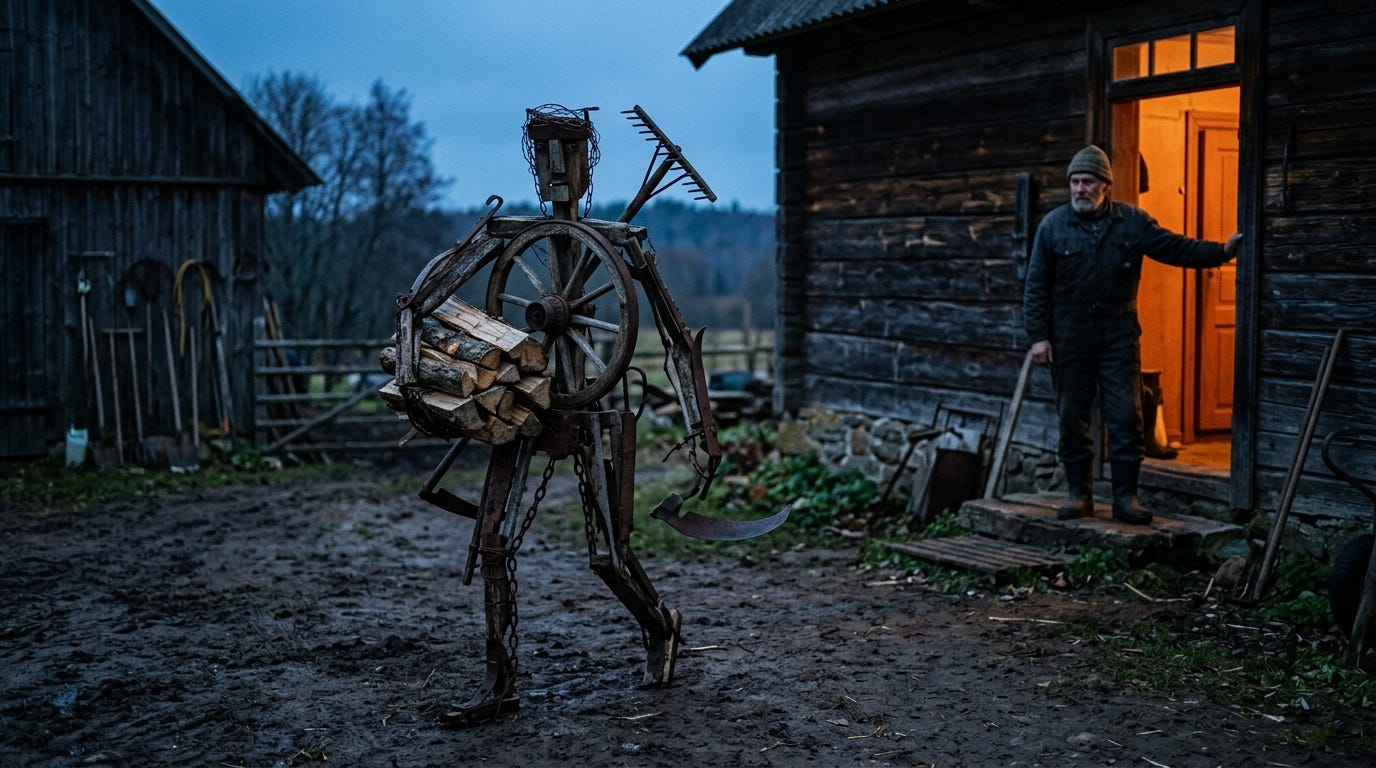
Underneath the Lutheran surface in Estonia lies its own animist layer—fairies, sacred groves, house spirits. And we have Kratt: a creature of folklore, assembled from old junk and given a soul to work for its master.
There is a direct parallel here to Nick Bostrom’s paperclip maximizer. It carries out commands literally, and if it runs out of work, it turns against its master. This is the same concern Tallinn expresses—a machine that does what it is commanded, and not what was intended. Kratt is not machine intelligence, and its danger lies in carrying out the commands given by a human.
When the Estonian state began naming its AI applications, it did not choose Frankenstein or a god, but Kratt. So at the state level, we chose animism over Christianity
.
I know what kind of future I want to live in. One where the world is full of all kinds of strange and powerful minds—spirits, machines, beings we are only beginning to understand. Not one where a machine-god is feared, conquering death and disease is deemed hubris, and humans are left in labor servitude because someone believes that without it, life loses its meaning.